Showing posts with label David Cameron. Show all posts

Tuesday, 30 October 2012

Multinational organisations like Apple and Facebook regard tax avoidance as a moral imperative. Isn't it time we made them pay up?


In the midst of the Jimmy Carr tax avoidance scandal earlier this year (in case you were holidaying off-planet that week, Carr was left rather red-faced after it emerged that his accountant was channelling the comedian's earnings into a Jersey-based tax shelter), the BBC carried a fascinating interview with accountant Ronnie Ludwig. Yes, that's right, a fascinating interview. With an accountant.

As you might expect, Ludwig drew a firm distinction between tax evasion (trying to avoid playing tax by illegal means) and tax avoidance (attempting to mitigate the amount of tax you pay). But what most interested me was his answer to the question "Is morality part of your business?"
No, it isn't. We do not sit in judgment of our clients' moral values, nor do we preach morals to them. What we do is give advice based on the law. 
Pushed about whether a tax avoidance scheme designed to circumvent the intent of the law would bother him, he replied: "Probably, on a personal level, yes. But I'm there to advise on the legality of it, and if this particular scheme would work, and that is it." I have no doubt that Ludwig's stance is standard practice in most areas of professional life.

Jimmy Carr at least had the decency to be embarrassed once his tax arrangements became public ("I now realise I've made a terrible error of judgment"), but yesterday a gem of a press release landed in my inbox from Nigel Green, the chief executive of the deVere Group, the world’s largest independent financial advisors. Written in response to David Cameron's comments in parliament last week that he was "unhappy" with the level of tax avoidance by large corporations operating in Britain, Green retorts:
Mr Cameron is slamming companies who take legal measures to minimise their tax liabilities.  Of course businesses try and mitigate their taxation as they have a responsibility to their shareholders to turn as large a profit as possible, which is both honourable and economically responsible as profit creates jobs and wealth. 
That word "honourable" really leaps out - and not just because I've italicised it. Green and his ilk appear to believe, entirely sincerely, that tax avoiders are performing a morally laudable public service. This despite the fact that the "wealth creator" argument has already been comprehensively dismantled (for a quick overview, I recommend this brilliant column by the Guardian's Aditya Chakrabortty or this article by Salon's Michael Lind. For a longer view check out Matt Taibbi's long profile of Mitt Romney in Rolling Stone).

Better yet, Green goes on to say in his press release that the Prime Minister having the audacity to refer to massive corporate tax avoidance constitutes "demonising corporations" and could "incite protest groups to employ ‘direct action’ tactics against major brands". David Cameron: anti-corporate rabble-rouser. It's certainly a novel approach. 

Trying to frame a rational response to this level of brazen brass neckery (dictionary definition: "someone with no sense of shame about what they do") is extremely difficult. All we can say for certain is: Toto, I've a feeling we're not in Kansas any more. The global financial elite is operating in a mirror world, one in which black is white and up is down and being asked to pay your full tax bill is not only a gross imposition, but as Green makes clear, to do so would be a gross dereliction of duty to your shareholders.

Appeals to corporate conscience or the public good are now worthless. The only way to clamp down on tax avoidance is regulation that honours the spirit of the law and an aggressive approach to closing loopholes.

But the problem with closing loopholes, as Amy Rosenbaum pointed out in reference to VP nominee Paul Ryan, is that it requires standing up to the special interests that benefit from them. In August there were calls for Google bosses to be hauled in front of the Treasury Select Committee to explain why they paid only £6m tax on UK revenues of £395m in 2011. 

This is, just to be clear, the same Google who it was reported in May had met with Tory ministers at least once a month since the last general election. Unless the cosy relationship between UK politicians and multinationals is severed, the prospect of getting large corporations to pay their full tax bills seems a distant blot on the horizon.


Tuesday, 24 January 2012

David Cameron is downright delusional if he still thinks unemployment will fall over this parliament


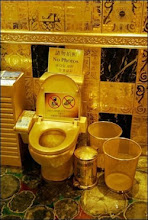
The Golden Latrine dimly remembers July 2010, one month after the Coalition's election - a time when he was still hiding under the duvet, fingers firmly plugged in his ears, la-la-laing and praying it was all just a feverish dream.

Back then our freshly-minted PM latched on to figures from the Office of Budget Responsibility (OBR) to confidently predict during Prime Minister's Questions: "Unemployment is going to be falling during this Parliament". Let me just repeat that: Unemployment is going to be falling during this Parliament.

While it was transparently obvious that the deficit reduction plan was going to wipe out large swathes of public sector jobs, Cameron was insistent that the growth in the private sector would more than makes up it.

In fact, as recently as June 2011, Cameron's friends at the Thatcherite Centre for Policy Studies were claiming that public sector job losses would be offset by a ratio of 3:1 in the year from March 2011.

Those claims now look openly delusional, to put it mildly. Over the last year, new private sector jobs have (just) offset public sector job losses, but I don't imagine that momentum is likely to be maintained.

Cameron, meanwhile, is still claiming that there have been over 500,000 new private sector jobs created since he was elected, a claim which some minimal digging from Channel 4's FactCheck proved to be just plain untrue.

New statistics released on January 18 by the Office for National Statistics show unemploymemt at 2.68m (8.3%), the highest since 1995. David Cameron responded at PMQs by taking "responsibility" for the figures, rather than the blame - a stance nicely lampooned by the Guardian's parliamentary sketch writer Simon Hoggart:

[Cameron said] "The government takes absolute responsibility for everything that happens in our economy, and I take responsibility for that." But not the blame. It might be the government's responsibility, but it isn't their fault.

Except clearly it is. The idea that the private sector could take the slack for the wholesale vandalism of the state (and by extension, public sector jobs) has been shown to be fundamentally flawed. In the three months to November, employment in the private sector rose by 5,000, while employment in the public sector fell by 67,000.

There was also a large increase in part-time work, a classic sign, as Larry Elliott has pointed out, of weak demand in the labour market.

And why does all of this matter, you ask? Because unemployment is the spanner in the economy, creating a vicious circle. When unemployment is high, people have less money to spend: benefits don't stretch far, and companies can get away with offering pitiful wage increases to those clinging to a job, knowing employees will be take whatever they're offered. But that lack of spending hits the economy, which means new jobs aren't created. It's a cruel algebra, and one that looks set to be troubling the UK for some time to come.


Sunday, 4 September 2011

David Cameron is wrong - Britain isn't broken, just slightly chipped


The Golden Latrine is old enough to remember those glorious days, way back when, when life was all rosy-cheeked children playing football in the street and fry-ups and chatting to Nora from the lauderette down the labour exchange.

But how different life is now compared to that golden past - at least according to PM David Cameron, who is adamant that the nation is in the grips of a full-blown moral crisis.

In case you missed it, Tony Blair recently penned a piece on the UK riots in The Observer, in which he argued that the riots were down to a relatively small number of highly dysfunctional, asocial households which are atypical of Britain as a whole. As Blair put it:

The left says they're victims of social deprivation, the right says they need to take personal responsibility for their actions; both just miss the point. A conventional social programme won't help them; neither – on its own – will tougher penalties. The key is to understand that they aren't symptomatic of society at large.
This seems to me an eminently sensible analysis. Study after study has shown that prison doesn't work, but neither does sending in a single social worker once a week. Wholesale 'family intervention' is required. And to be fair to Cameron, he seems to agree, vowing to turn round the lives of 120,000 troubled families by 2015.

But there was a very definite disagreement about what the riots meant. Blair concluded his Observer piece:
Elevate this into a highfalutin wail about a Britain that has lost its way morally and we will depress ourselves unnecessarily, trash our own reputation abroad, and worst of all, miss the chance to deal with the problem in the only way that will work.[my emphasis]
However, David Cameron remained unconvinced. Responding to Blair in an interview on the Today programme, Cameron insisted that Blair was wrong, and that the moral malaise was far more widespread:

In the riots there was clearly a hardcore of people who were just breaking the law and had no sense of right and wrong or moral boundaries. But, tragically, we also saw people who were drawn into it, who passed the broken shop window and popped in and nicked a telly.

And that is a sign of actual moral collapse, of failing to recognise the difference between right and wrong. So I don't think you can simply say this is just a criminal underclass and no other problem at all. I think it does go broader than that.
The mistake Cameron makes, it seems to me, is in treating rioting and looting as the same thing. While the hardcore rioters may well have been the troubled families Blair (and Cameron, for that matter) believes we need to target - aided and abetted by the odd bored student - plenty of people helped themselves to a free t-shirt or widescreen television. Evidence of a far-reaching moral malaise? Or just a reminder of a basic article of human nature: if we can get something for free, we will?

Remember the cases of the cash machines malfunctioning and giving out free money? There's been numerous cases of queues of well-balanced, middle-class people queuing round the block with their children for their handout.

In many ways Cameron's Today interview was just a reprisal of this speech made in August, in which he talked about the coalition tackling "the slow-motion moral collapse that has taken place in parts of our country these past few generations". Buying into the myth of moral decline seems to be an occupational hazard for Tory PMs - Thatcher frequently pined for "Victorian values", seemingly oblivious to the fact her allegiance to free market economics was dissolving those very community values.

So whenever we feel tempted to start seeing the riots as omens of the forthcoming apocalypse, let's just remember: none of this is new. 2000 people helping themselves to some free trainers is not the end days. The fear of feral youths and teenage gangs is a phenomenon that is centuries old. Let's try and keep some perspective, yes?

Saturday, 13 August 2011

The UK riots: a reaction to ingrained poverty? The work of "mindless" thugs? Or just an over-enthusiastic shopping spree?


Britain, first an apology.

Like our blessed Prime Minister, The Golden Latrine watched the UK riots unfold from a shadowy lair in the sunny Tuscan hills, a glass of flat prosecco in one hand and smartphone in the other. As England smouldered and its anxious citizens cried out for a State of the Nation blog, I lay sweating in paradise, perversely wishing I was there.

After getting past the initial "What, in the name of David Dimbleby, is going on?", the question I, like everyone else, wanted answering most was simple: Why is this happening? As the initial suggestion that this was a political protest over the shooting of Mark Duggan faded, a large section of the population (and the media) quickly reached a consensus that the rioting was "mindless" - an atavistic outpouring of rage from an animalistic underclass incapable of higher thought.

Such was the hysteria surrounding the riots and looting, that the suggestion was that even looking for causes was wrong. As Owen Jones said in a Newsnight interview with an inflammatory David Starkey: "there's a dangerous climate at the moment, I think, to even begin to understand the underlying social and economic causes is seen as justifying mindless thuggery" (and in this context Labour leader Ed Miliband deserved a great deal of credit for not giving in to the temptation to sensationalise, telling a crowd in Manchester: "We have got to look into the causes, why people are going around doing this. And I think there are a complex number of causes").

There were, though, commentators who did try and delve into the rioters' motives. The idea of the rioters' "mindlessness" was challenged by Dan Hind in his piece for Al Jazeera and Russell Brand, while in The Guardian Zoe Williams  produced a brilliant piece on the psychology on the rioters and looters.

Williams set out the three common positions on the riots: the authoritarian response (riots as glorified mugging, carried out by a generation with a colossal sense of entitlement, and enabled by a limp-wristed, mealy-mouthed criminal justice system); (the liberal response (as exemplified by youth worker Camila Batmanghelidjh's piece in the Independent); and a more pragmatic response (summed up perfectly by blogger Sarah Carr:
"the media coverage makes them look like cunts. And perhaps many of them are. But even cunts can have legitimate grievances. Maybe they’re destroying stuff because they have no other channel to express their sense of hopelessness and rage at their situation. Or maybe they and their friends just like the thrill of a ruckus with the added bonus of free gear."

The best example of the authoritarian response unquestionnably came from Golden Latrine favourite Melanie Phillips, who, in a truly batshit crazy piece in the Mail blamed Labour, lone parents, "ultra-feminists", the welfare state, 'victim culture' and multiculturalism for the rioting.

What was really interesting in Williams' piece, though, was her discussion of whether the riot was nihilistic ("everything is shit and pointless") or consumeristic ("I want a new pair of trainers"). She persuasively argued that the two were not necessarily contradictory, quoting marketing and consumer expert Alex Hiller:

If you look at Baudrillard and other people writing in sociology about consumption, it's a falsification of social life. Adverts promote a fantasy land. Consumerism relies upon people feeling disconnected from the world.

And personally I think that's bang on the money. The UK riots saw young people turning that advertising fantasy world into a reality, which is why the whole thing looked so unreal, like a computer game. And the sense of rioting and looting as a great adventure cannot be overlooked - just read Kevin Sampson's piece on his part as a youngster in the Toxteth riots:
In all the hours and pages of reportage since rioting returned to our cities last weekend, not one commentator seems to have touched upon the sole unifying factor that fuels and drives such unrest – excitement, fun, teenage kicks. In 1981 I could have cited unemployment (check), low-income, single-parent family (check), experience of police brutality (check) as factors in my participation, but none of the above even remotely came into my thinking then and I doubt it is stoking today's unrest, either.

I went along in 1981 because I was swept away by the mind-blowing buzz of mob mayhem. There's no justifying that – in the crudest terms such behaviour is quite simply wrong – but try telling that to a 15-year-old on a mountain bike. To him or her, it's like a Wii game come to life – a hyper-real version of GTA. You taunt the police until they chase you, then you leg it and regroup. Some of the more radical kids will throw rocks and set cars and wheelie bins alight to get them going, but sooner or later the "bizzies" (police) will charge.


It makes you think, eh?

Wednesday, 5 May 2010

The Not So Big As You Imagined Society


One of the great fallacies/thought farts of this election has been Cameron's idea of the "Big Society", which basically translates as: "should you have any problems, it's not our fault, you're on your own kiddo."

This is politicians abdicating responsibility, giving up on The State. It harks back in the most transparent way to Thatcher, whose genius was to somehow convince the British electorate that, even after unemployment had reached 3 million, it wasn't the State's place to intervene.

And if you don't believe me, how about this from the Times, not usually the most Labour-friendly of papers:

"If the Conservatives get in, Osborne will be overseeing the biggest spending squeeze since 1945 as they engage in their traditional pastime of scaling back the welfare state. Over the decades, the main task of any Tory administration has been to come up with a new, euphemistic way of describing how it will scale back the welfare state. Cameron's pop is the coining of the phrase 'Big Society'. Big Society, charities and voluntary organisations will, apparently, step in and pick up the slack in areas where once the welfare state existed.

For anyone wondering if this might work, Cameron's former tutor at Oxford, Vernon Bognador, appeared to explain:

"That is the philosophy of the 19th century," he said, briskly. "What does 'Big Society' really mean? That if you become destitute the Salvation Army will step in? It doesn't work. That's why we invented the State."